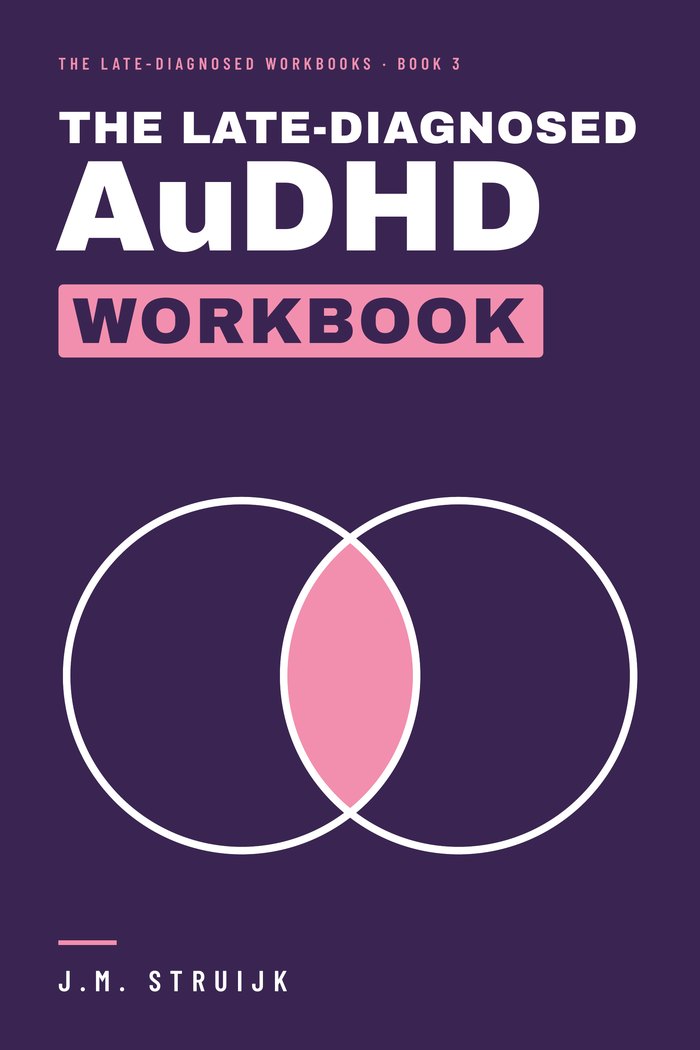
Finding out as an adult that you are both autistic and ADHD (often shortened to AuDHD) can explain a lot at once. It can also leave you with two sets of advice that pull against each other. A strict routine can settle the autistic side of you and feel suffocating to the ADHD side, and the reverse happens too.
This is a 99-page write-in workbook for adults in that position. It is written from lived experience by an author who was diagnosed late with both, and it is meant for self-understanding. It is not a clinical text and it does not diagnose anything. Much of its material also appears in the other two Late-Diagnosed workbooks, so if you own one of those, read the questions at the bottom of this page before you buy.
Who it's for
- You found out you are autistic and ADHD as an adult, through an assessment or by recognizing yourself.
- Advice written for ADHD alone or for autism alone has never quite fit you.
- You want sameness and novelty, or company and time alone, often on the same day.
- Noise and bright light overload you, yet you get restless when things are too quiet.
- You would rather write on the page than read another book about it.
You can start with whichever part is loudest in your life right now and skip anything that does not apply.
What's inside
There are seven parts. Each ends with a page for what you want to keep and a page for notes.
- Your wiring: the relief and grief after a late diagnosis, a two-system map for marking where your autistic and ADHD pulls sit, a page for rewriting the old story you were told about yourself, and a four-part self-portrait.
- Executive function: shrinking the first step, naming what is in the way, body doubling, comparing guessed time with real time, an activation-energy ladder, switch-points between tasks, and an external-brain page.
- Sensory life: a sensory profile, a regulation toolkit with one list for turning the volume down when you are overstimulated and one for turning it up when you are understimulated, a page on stims, an overload warning ladder, a sensory go-bag, and a reset plan for after overload.
- Energy and burnout: your early warning signs, a one-week and a four-week energy tracker, a recovery menu, a minimum day for bad days, and a page on which kinds of rest leave you rested.
- Masking and unmasking: where you mask and what it costs, a masking map, small unmasking experiments in places that feel safe, and an unmasking log.
- Self-advocacy: scripts for asking for an accommodation, naming a need, setting a boundary, declining, asking for time to think, and speaking up at a medical appointment, plus a page on deciding whether to disclose.
- Routines that survive: one habit with a minimum version and a restart plan, a five-minute weekly check-in, plans for high-, medium- and low-energy days, and a page for writing your own manual.
The pages written for having both are mostly the two-system map in Part One and the volume-down, volume-up toolkit in the sensory part. The rest covers ground that many AuDHD adults share with ADHD or autistic adults generally.
Where it fits
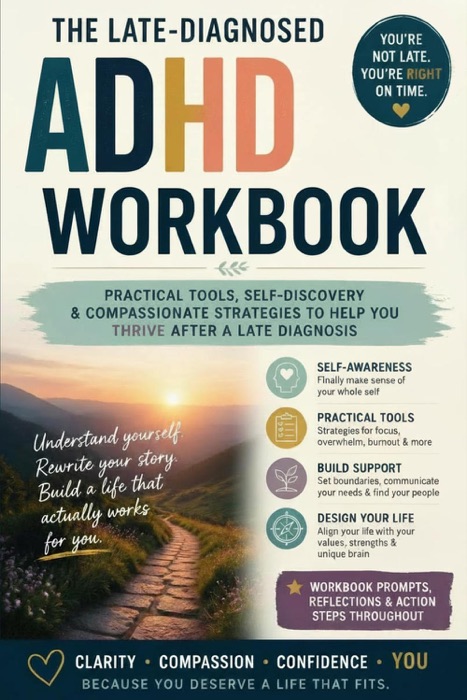
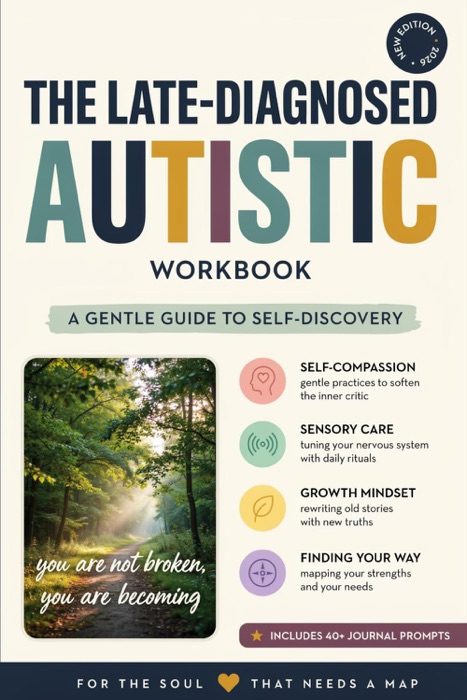
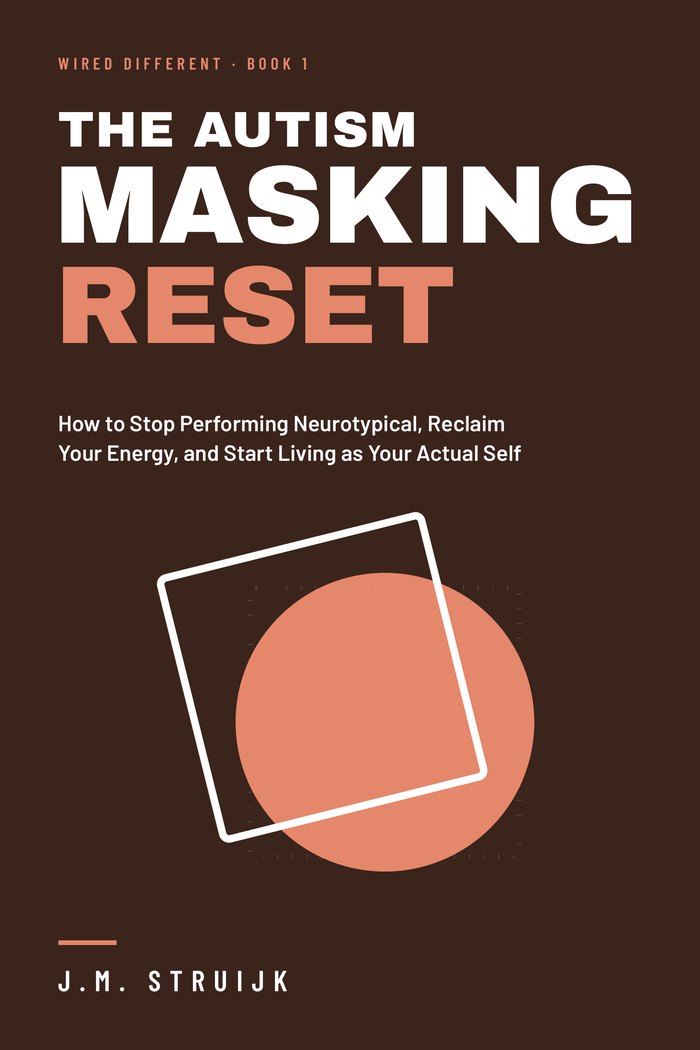
This is the third of the Late-Diagnosed workbooks. The Late-Diagnosed ADHD Workbook goes further on attention, hyperfocus and big feelings, and The Late-Diagnosed Autistic Workbook has whole parts on connection and on change and transitions, which this book leaves out. For masking in more depth, The Autism Masking Reset is the full guide. If you want to read about the overlap first, start with the article on being autistic and ADHD.
Common questions
Is the AuDHD workbook different from the ADHD and autistic workbooks?
Partly. The three workbooks share a foundation. The executive function part and the routines part are close to the versions in The Late-Diagnosed ADHD Workbook. The sensory, energy and masking parts closely follow The Late-Diagnosed Autistic Workbook, with a few added pages. The opening part, the scripts and the closing pages are shared by all three. What is new here is mainly the two-system map and the volume-down, volume-up toolkit, which are written for having both.
Should I buy it if I already own one of the other Late-Diagnosed workbooks?
If you own one, about half of this book will look familiar, and you may prefer to buy the other workbook instead. If you own both, most of this book will be familiar. This workbook makes the most sense if you own neither and want a single write-in book that covers both sides.
Do I need a formal diagnosis of both to use it?
No. The workbook is written for adults who found out through an assessment or through recognizing themselves, and it does not ask for proof. If you are still deciding whether to seek an assessment, the article on adult ADHD and autism assessment explains what the process usually involves.
Is it a workbook to write in or a book to read?
It is a workbook. Short explanations open each section, and most of the 99 pages are prompts, tables and lines to fill in. You can do one page at a time and come back whenever you like.