Finding out you have ADHD as an adult explains a lot at once: the unfinished projects, the missed deadlines, the emotional tidal waves, the boom-and-bust years. Right behind the relief comes a harder question, which is what to do now.
This workbook is for that question. It leaves out the clinical jargon and the "just use a planner" advice, and gives you honest prompts, practical structures, and room to work things out.
Who it's for
Adults who found out later that they have ADHD, whether last month or years ago. It is written from lived experience as a companion for self-understanding. It is not a clinical text and not a diagnostic tool.
What's inside
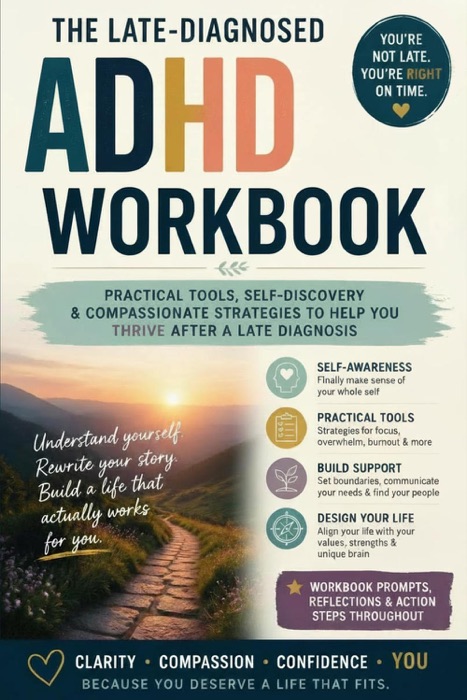
The workbook runs through seven parts:
- Your Wiring: the relief, the grief, and the interest-based way your attention runs.
- Executive Function: starting, time blindness, and the wall between knowing and doing.
- Attention and Hyperfocus: where your focus goes and how to bring it back.
- The Big Feelings: rejection sensitivity, emotional flooding, and relabelling the archive of old shame.
- Energy, Sleep and Burnout: the boom-and-bust cycle and a gentler rhythm.
- Self-Advocacy: scripts and wording you can borrow until they feel like yours.
- Routines That Survive: habits built to bend on bad days instead of breaking.
Every part ends with one small thing to carry forward. You can start anywhere, skip anything, answer in one word, and leave it for a month without having failed it.
Where it fits
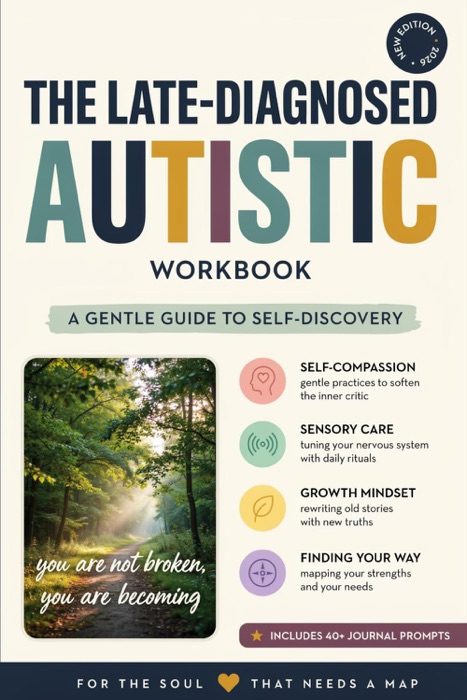
It pairs with The Late-Diagnosed Autistic Workbook, and the two are designed to be used together by AuDHD readers. The article on the first year after an adult ADHD diagnosis covers what that period tends to feel like, and time blindness goes deeper on one of its core subjects.
Common questions
Do I need a formal diagnosis to use it?
The workbook is written for adults who have found out they have ADHD, and it is a tool for self-understanding rather than diagnosis. It does not assess or confirm anything clinically.
Does it cover rejection sensitivity?
Yes. Rejection sensitivity is part of The Big Feelings section, along with emotional flooding and working through old shame.
Can I use it alongside therapy or medication?
Yes. It is a practical companion, not a treatment, and it can sit alongside whatever professional support you have.