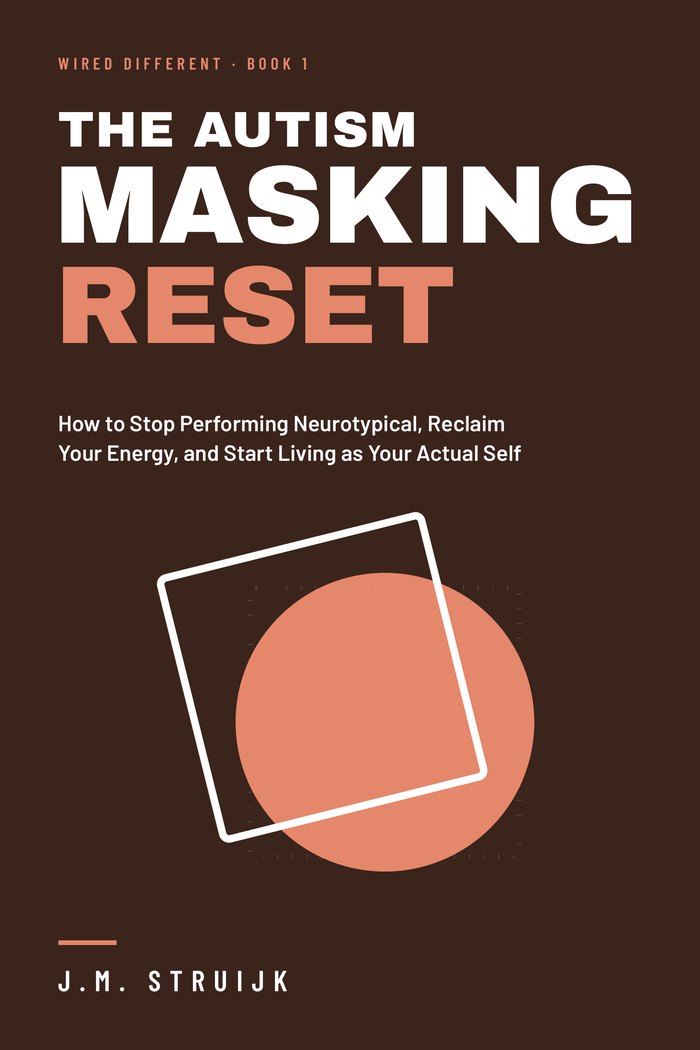
Masking, sometimes called camouflaging, means hiding autistic traits and acting out non-autistic social behavior. It covers things like forcing eye contact, rehearsing small talk, managing your face in every conversation and holding back stims. Many autistic adults have done it for so long that they only notice the exhaustion afterward.
This book helps you see your own masks, work out what each one costs, and decide where it is safe to set some of them down. Unmasking everywhere is not the goal. Continuing to mask at a hostile job or in an unsafe situation is treated as a reasonable decision, and the last chapter is about exactly that.
Who it's for
- You found out recently that you are autistic, or recognized it yourself, and now see masking all through your past.
- Social events that are supposed to be easy leave you drained for hours or days.
- People tell you to "just be yourself," and you do not know where that would be safe.
- You hide your stims at work or around family.
- You want to tell someone you are autistic and do not know what to say.
It is for autistic adults with a formal diagnosis and for those who self-identify. It is written from lived experience by an author who was diagnosed late with both ADHD and autism, and it is not therapy or a clinical text.
What's inside
There are ten short chapters, and each ends with an exercise called an Action Reset.
- What masking is, why people learn it, and a first inventory of the masks you wear.
- A full masking inventory across eight categories, from social scripts and managing your facial expressions to hiding stims and replaying conversations afterward, rated for how often you do each one and how much energy it takes.
- The energy cost of masking, the cycle of masking, depletion, crash and partial recovery, and a one-week energy log.
- Why unmasking can feel frightening, including real safety risks, grief, and the voice that says you are faking.
- A selective unmasking framework: sorting the people and places in your life into green, yellow and red tiers, with questions for judging each one honestly.
- Reclaiming stims, starting with one stim in a place where you feel safe.
- Scripts for telling a partner, friends, family, or coworkers and a boss, ways to ask for changes at work without disclosing, and what to do when people react badly.
- Rewriting your story after a late diagnosis, planning an unmasked day, and a closing chapter on when you can't unmask yet, with micro-breaks, planned recovery, lower-cost masks and a masking survival kit.
The back of the book lists the research it cites, autistic-led communities, ways to find a neurodiversity-affirming therapist, and US crisis lines.
Where it fits
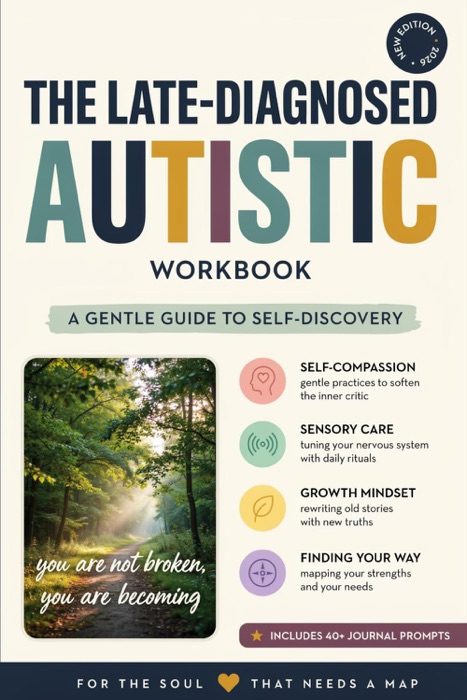
This is the library's full guide to masking. The Late-Diagnosed Autistic Workbook and The Late-Diagnosed AuDHD Workbook each have a masking part in write-in form, and this book goes deeper on the same subject. For a shorter introduction, read the article on autistic masking and what it costs. If masking has left you exhausted and low for a long time, the article on autistic burnout, ADHD burnout and depression can help you tell them apart.
Common questions
Does The Autism Masking Reset tell you to stop masking completely?
No. The book treats unmasking as a choice you make person by person and place by place. Its tier system helps you find the spaces where unmasking is safe, and its last chapter is for readers who need to keep masking for now, at work or at home, and want it to cost less energy.
Is it for people who self-identify as autistic?
Yes. The book is written for adults with a formal diagnosis and for adults whose own research led them to recognize that they are autistic, and it treats both as valid.
Does it help with telling people you are autistic?
Chapter 7 has scripts for telling a partner, friends, family, and coworkers or a boss, which you adapt to your own words. It also shows how to ask for practical changes at work, such as written instructions or a quieter space, without naming autism, and what to do if someone reacts badly.
How is it different from The Late-Diagnosed Autistic Workbook?
The Masking Reset is a short guide you read, with one exercise per chapter, and it is entirely about masking. The Late-Diagnosed Autistic Workbook is a write-in workbook that covers sensory needs, energy and burnout, communication, change and accommodations as well, with masking as one of its seven parts.