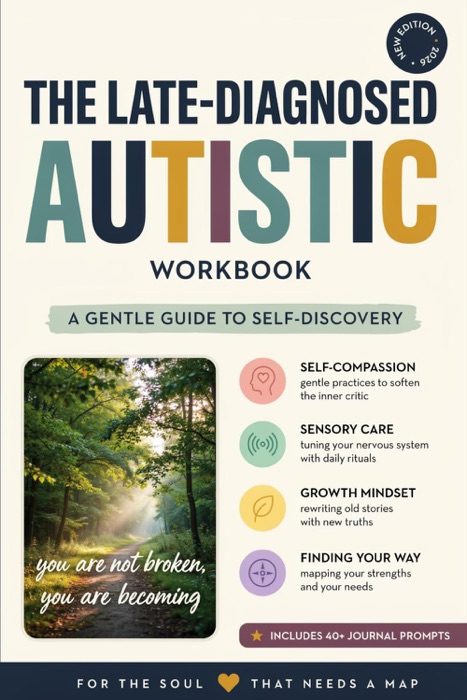
Finding out you are autistic as an adult can feel like an odd kind of homecoming. The sensory overwhelm, the exhaustion after supposedly easy social events, the years of performing normal so well that even you stopped noticing: suddenly it makes sense. Then comes the question of what to do next.
This workbook is for that stage. It is written for adults who found out later, through formal assessment or quiet self-recognition, and both routes are welcome.
Who it's for
Autistic adults who were identified late and want practical tools for building a life that runs on their wiring instead of against it. It is written from lived experience for self-understanding. It is not a clinical text and does not diagnose anything.
What's inside
There are seven parts:
- Your Wiring: the relief, the grief, and your deep-focus mind.
- Sensory Life: a sensory audit, stimming without shame, and designing surroundings that fit.
- Energy and Autistic Burnout: reading your battery before it hits zero.
- Masking and Unmasking: what the performance costs, and choosing where to set it down.
- Connection, On Your Terms: communication as a dialect rather than a deficit.
- Sameness, Change and Transitions: honouring routine in a world that keeps moving.
- A Life That Fits: self-advocacy scripts, accommodations, and the manual you were never given.
Each part ends with one small thing to carry forward. Start with whichever part is loudest in your life right now, skip anything, and come back whenever you like.
Where it fits
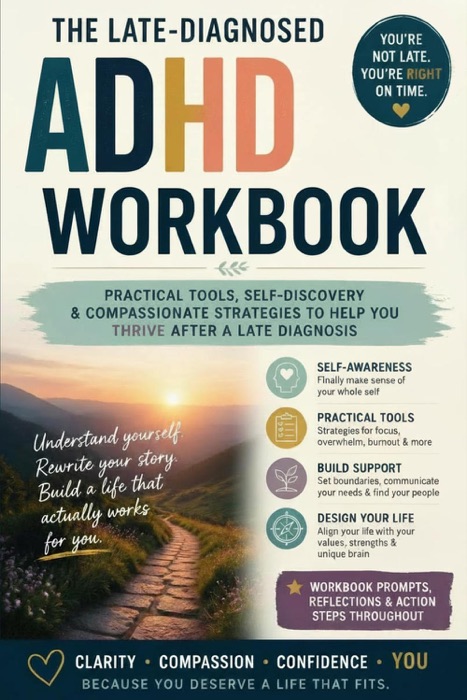
It pairs with The Late-Diagnosed ADHD Workbook for AuDHD readers. Related articles: finding out you are autistic in adulthood, masking and what it costs, and stimming and sensory overload.
Common questions
Is it for people who self-identify as autistic?
Yes. The workbook is written for adults who found out through formal assessment or through self-recognition, and treats both as valid starting points.
Does it help with unmasking?
Masking and unmasking have their own part, covering what masking costs you and how to decide where it is safe and worthwhile to stop.
Does it cover autistic burnout?
Yes. The Energy and Autistic Burnout section is about recognising when your capacity is running low before you reach burnout.