Finding out you are autistic in adulthood
What changes when you find out in your thirties or forties that you are autistic, why so many adults are missed, and what the first months involve.
It rarely starts with a doctor. For most people I have spoken to, it starts with a video, or a thread, or a friend's offhand comment, and then a long quiet period of reading at night without telling anyone.
The first reaction is usually to dismiss it. You do not look autistic, by which you mean you do not resemble the narrow version you were shown growing up. You have friends. You can hold a conversation. You made eye contact with someone this week.
Then you read a description of sensory overload, or of what a social event costs afterwards, and something you assumed was universal turns out to be specific.
Key takeaways
- Most late-identified autistic adults have been masking so long that the mask reads as personality.
- The old diagnostic picture missed anyone who was verbal, academically able, or socially motivated.
- Self-identification is widely accepted in autistic communities, and formal assessment is expensive and slow in many places.
- The first months are mostly reinterpretation, not change.
- Sensory needs are usually the fastest practical improvement available.
Why you were missed
The description that most adults alive today were measured against was built from observations of young boys with obvious, visible differences. If you were verbal, did well at school, and wanted friends, you did not resemble that description and nobody looked further.
Masking is the other half of it. If you worked out early that copying other people produced better outcomes than being yourself, you got good at it, and the better you got the less anyone saw. Many late-identified adults were praised throughout childhood for exactly the behaviour that was concealing them. Being described as mature for your age, or sensitive, or a bit of an old soul, often turns out to mean something else in retrospect.
Women, non-binary people, and anyone who was socially motivated enough to study people deliberately were missed at much higher rates. So were people whose difficulties got filed under anxiety, depression, or an eating disorder, which were treated for years with limited effect because the underlying thing was never addressed.
The reinterpretation
The work of the first months is not change. It is going back through your own history with a different lens.
The exhaustion after social events that you assumed was introversion and could never quite square with the fact that you liked the people. The specific clothing you have always bought, which you thought of as a preference and now looks like a sensory requirement. The jobs that went wrong for reasons you could never explain properly. The childhood interests that were so consuming other people found them strange, and which you learned to talk about less.
Food comes up for almost everyone. Textures, temperatures, the same meal for years, a short list of things that are safe. Most people had this filed under fussiness, usually because that is what they were told.
So does the lifelong sense of running a translation layer. Watching how others do things, copying it, checking the result, adjusting. Many late-identified adults describe realising that other people are not doing this, which is a genuinely disorienting thing to learn in your forties.
The mask is not something you put on. By the time you find out, it is most of what you think you are.
The part that is hard
The relief is real and it is not the whole story.
There is anger, often at the places that were supposed to notice. There is grief for the decades spent trying to fix things that were never faults. There is a specific loneliness in realising that the effort you have been making invisibly was both enormous and unacknowledged, because the entire point of masking was that nobody could tell.
Identity gets unstable for a while. If a large portion of your behaviour was learned camouflage, working out what is underneath takes time, and the question of who you would have been without it has no answer. It is worth sitting with anyway.
And there is an awkward practical problem. Once you know, the mask becomes harder to hold. Many people find their tolerance for environments they used to survive drops sharply after identification. That is usually interpreted as getting worse. It is more often the end of a very long unconscious effort, which is not the same thing.
Assessment, if you want one
Whether to pursue a formal diagnosis is genuinely a personal decision, and the honest answer is that it depends on what you need it for.
Formal assessment can matter for workplace adjustments, educational support, and in some places access to services. It can also provide a certainty that self-identification does not, which matters to some people a great deal.
The costs are real. Long waits in public systems, significant expense privately, and clinicians who vary in how well they recognise adults who mask. Some people go through assessment and are told no by someone working from an outdated picture, which is painful and does not settle the question.
Self-identification is accepted in most autistic communities and is a legitimate position, particularly given that access to assessment is unevenly distributed. You do not need anyone's permission to understand yourself accurately.
What helps early
Sensory changes give the fastest return. Loop earplugs or noise-cancelling headphones, lower lighting, clothing chosen for how it feels rather than how it looks, a room at home that is quiet and dim and nobody else's. These are small, cheap, and often make a noticeable difference within days, which matters when everything else is in flux.
Recovery time needs to be scheduled rather than hoped for. If a social event costs you a day, that day is part of the event, and planning as though it is not is how people end up in a deficit they cannot explain.
Stimming, if you suppressed it, is worth letting back in. Most late-identified adults were trained out of visible self-regulation young, and getting it back tends to help more than expected.
Reading autistic adults rather than clinical material is the other thing I would recommend without hesitation. The clinical literature describes autism from outside, in terms of deficits observable to other people. Autistic writers describe it from inside, and that is the version that is actually useful for living.
Common questions
Can you become autistic as an adult?
No. Autism is lifelong and present from early development. What happens in adulthood is recognition rather than onset. People frequently find, once they look, that the evidence was there throughout childhood and was interpreted as something else at the time.
Is self-diagnosis valid?
It is widely accepted within autistic communities, particularly given the cost and waiting times for formal assessment and the number of adults turned away by clinicians working from an outdated picture. Formal diagnosis still matters for accommodations and services in many places. Both things can be true at once.
What is the difference between being autistic and being introverted?
Introversion is about where your energy comes from and is one trait among many. Autism involves differences in sensory processing, communication, social intuition, and a need for predictability, and it is present across every part of life rather than only in social settings. Plenty of autistic people are sociable and still find socialising expensive in a way introversion does not explain.
Why do I feel worse since finding out?
This is extremely common and usually reflects the end of unconscious masking rather than a decline. Once you know what you have been doing, holding it becomes harder, and the full cost of it becomes visible for the first time. Many people describe a period of reduced tolerance before things stabilise.
Where do I start?
Sensory changes, because they are immediate and cheap, and reading autistic authors rather than clinical descriptions. The Late-Diagnosed Autistic Workbook is built around that order, starting with sensory needs and masking before anything else.
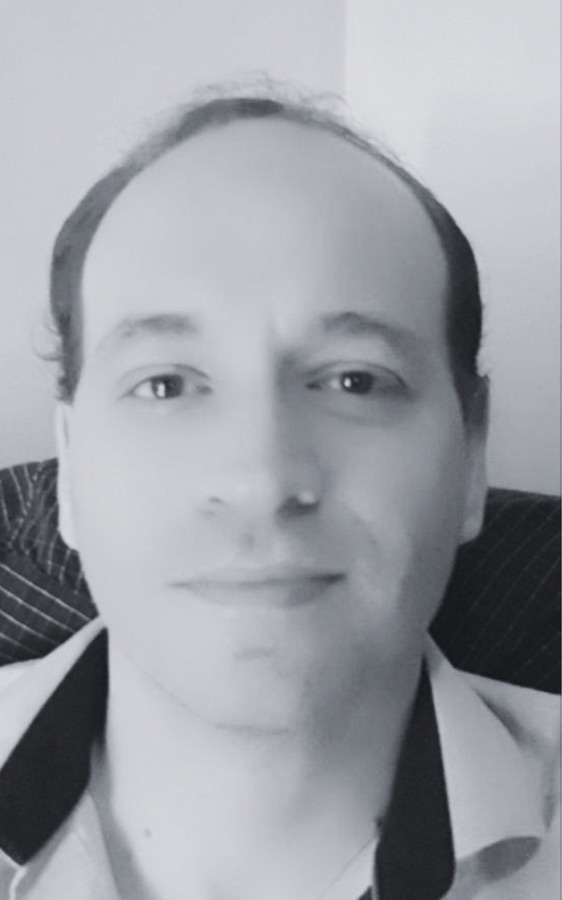
J.M. Struijk is an autistic author with ADHD, originally diagnosed with Asperger's, and a single father who raised a child with autism and ADHD. He writes practical companions for the brain you actually have, published independently through JMS Media Group LLC. See all the books or read more about the author.
I write from lived experience as an autistic adult with ADHD, not as a clinician. Nothing here diagnoses anything or replaces working with a doctor, therapist, or ADHD coach. If something in your life has become unmanageable, please talk to someone qualified.
The ADHD Survival Kit
Six printable tools I keep coming back to myself. Free PDF, sent to your inbox.