The ADHD tax is the money that leaves your account because of how your brain works rather than because of anything you chose to buy. Late fees on bills you had the money for. Subscriptions you meant to cancel. Things bought twice because the first one went missing.
This book is about stopping that, using systems that keep working on the weeks when you do not. It is the first book in the ADHD Money Mastery Series, and the one I recommend starting with if money is where ADHD costs you most.
Who it's for
- You have paid late fees on bills you could actually afford.
- You keep finding subscriptions you forgot existed.
- You have tried several budgeting apps and none of them lasted.
- You have gone overdrawn despite fully intending to move money in time.
- You are tired of financial advice written for a brain that works differently from yours.
It is written for people diagnosed last month and for people who have managed executive dysfunction for decades. You do not need a diagnosis to use it.
What's inside
The book works through the main places the ADHD tax comes from, and gives each one a system that does not depend on remembering or on willpower:
- Finding and cancelling the subscriptions that drain your account every month.
- Setting up autopay so late fees stop for good.
- Interrupting impulse purchases without trying to want things less.
- Paying off debt with an approach built around ADHD rather than around consistency.
- Building an emergency fund that grows without constant attention.
- Accountability systems that keep the whole thing running.
There is no shaming in it and no neurotypical budgeting template with ADHD stickers on it. The strategies are meant to be usable the same day you read them.
Where it fits
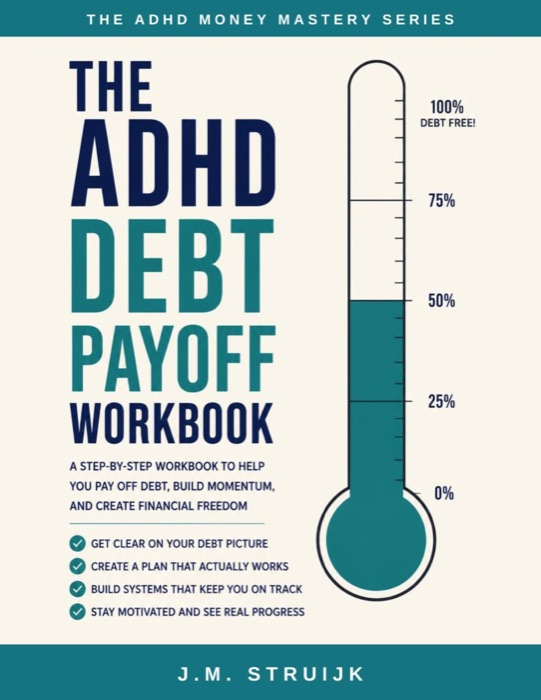
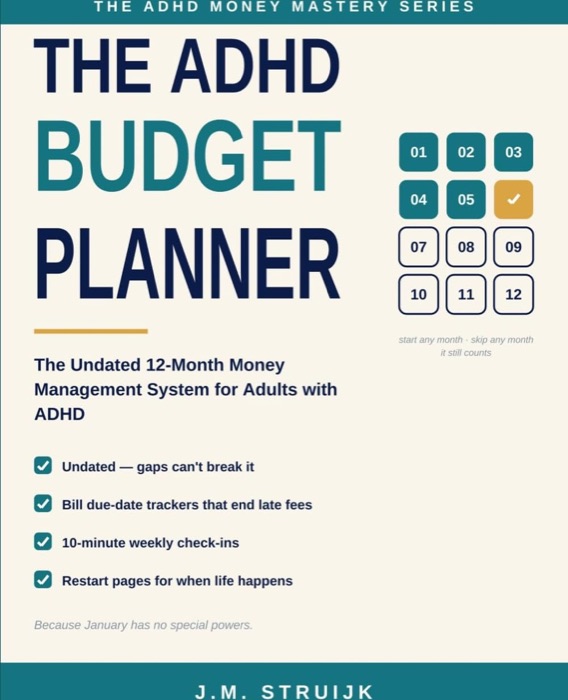
The ADHD Tax diagnoses where the money goes. The ADHD Budget Workbook is the guided 12-week version of putting a system in place, and The ADHD Debt Payoff Workbook goes deeper on clearing debt. If you want the short version first, the article on what the ADHD tax actually costs covers the core idea, and the free ADHD Tax Calculator uses the same categories as the book's Chapter 1 worksheet. The Impulse Spending Checklist is a free way to start interrupting impulse purchases before you read further.
Common questions
Is The ADHD Tax a workbook or a regular book?
It is a regular book, around 236 pages in print length on Amazon, with practical strategies throughout. If you want fill-in worksheets and a day-by-day structure, The ADHD Budget Workbook is the companion built for that.
Do I need to be diagnosed with ADHD to use it?
No. The strategies are built around how ADHD affects money, and they work the same whether you have a formal diagnosis, suspect you have ADHD, or simply recognise yourself in the patterns.
Should I read this before the other money books?
That is the order I would suggest, because it explains the patterns the other books build systems around. Each book in the series still stands alone, so starting elsewhere works too.