Most people with ADHD have tried budgeting and lasted about three weeks. This workbook is designed around that fact instead of pretending it will not happen again.
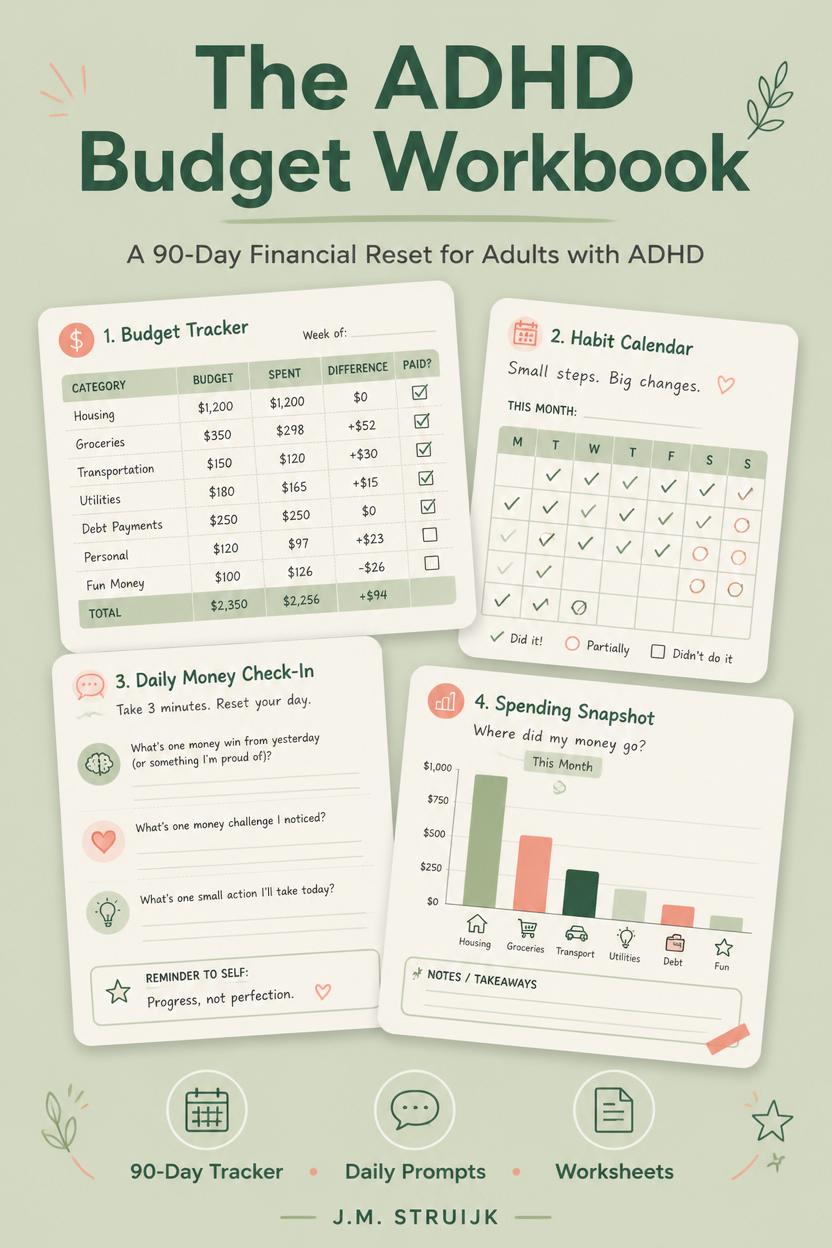
It is a guided 12-week program. Each day has one task that takes 15 to 30 minutes, so you are never deciding what to do next, and the structure expects you to miss days.
Who it's for
- Traditional budgeting has failed you, usually by week three.
- Late fees, overdrafts and impulse spending keep happening anyway.
- You want out of the cycle of shame that money tends to produce.
- You need a system that works with how your brain runs, not one that asks you to become consistent first.
What's inside
The program runs in four phases:
- Weeks 1 to 3 stop the financial bleeding and set up the 3-Bucket System.
- Weeks 4 to 6 automate everything and break impulsive spending patterns.
- Weeks 7 to 9 build an emergency fund and start attacking debt.
- Weeks 10 to 12 make the systems maintainable and begin building wealth.
Every strategy comes with a fill-in worksheet. There are visual progress trackers, checkpoints to mark progress, and flexibility built into the schedule for when life gets in the way. Week 10 is specifically about how to restart, because a plan that cannot survive a gap is not much use to an ADHD brain.
By the end, the aim is automated bill payments, a money system that does not lean on willpower, and an emergency fund that grows on its own.
Where it fits
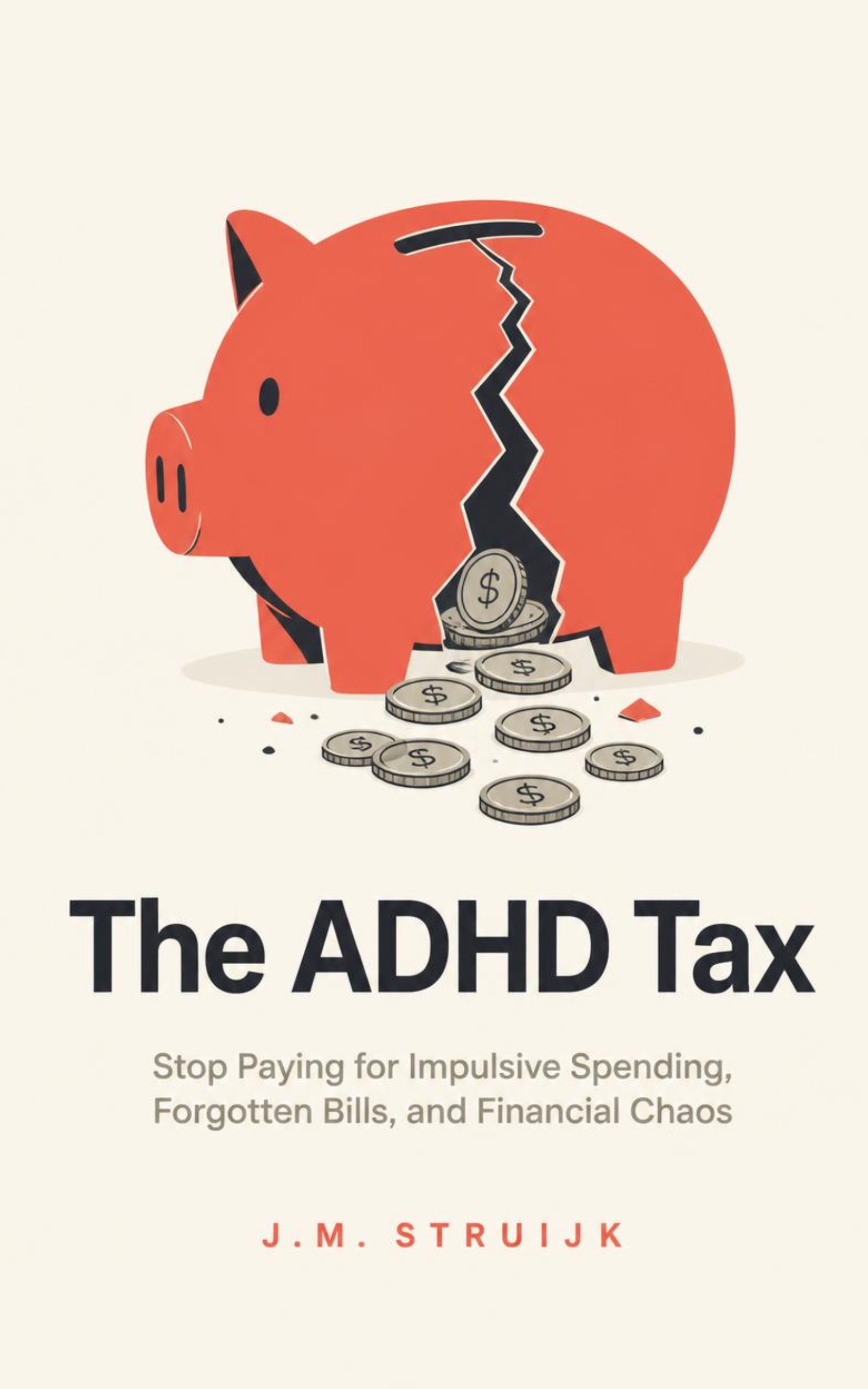
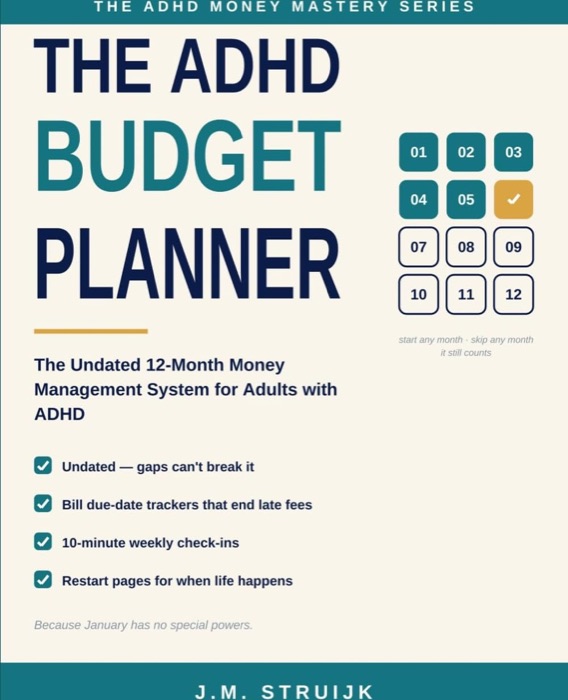
The ADHD Tax explains where the money goes and why. This workbook is the hands-on reset. Once the system exists, The ADHD Budget Planner is the undated planner for keeping it running month after month. The article on why ADHD brains overspend covers the spending side in more depth.
Common questions
What happens if I miss a day or a week?
You pick up where you left off. The workbook is built on the assumption that you will miss days, and week 10 is devoted to restarting after you have fallen off.
How much time does it take each day?
Each daily task is designed to take 15 to 30 minutes. On a bad day the guidance is to do a single task and stop.
Do I need spreadsheets or budgeting software?
No. Everything happens in the workbook itself, with worksheets for each step and no complicated spreadsheets to maintain.