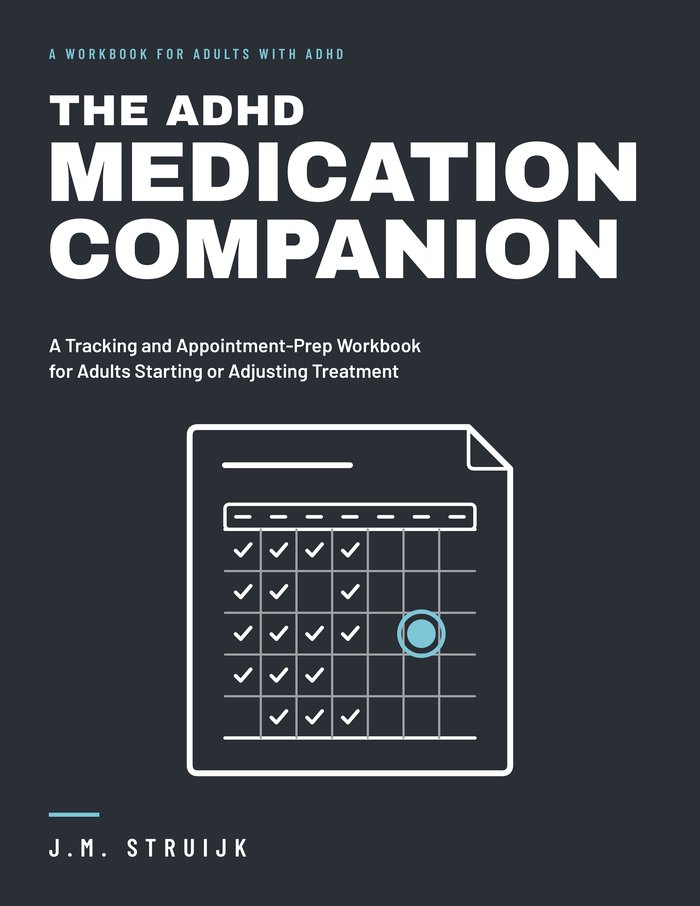
Starting or adjusting ADHD medication means noticing small changes over several weeks and then describing them in a short appointment. With ADHD, remembering those changes is often the hard part. This workbook gives you one line a day to write down what you noticed, and a page that turns those notes into a summary before you see your prescriber.
It is a tracking and note-taking tool. It names no medications and no doses, and it does not tell you what to take. Decisions about starting, stopping or changing a medication, its dose or its timing stay with you and your prescriber.
Who it's for
- You are about to start ADHD medication and want a record of how things were before.
- Your prescriber is adjusting your dose, timing or medication, and you want to report more than "I think it's been okay."
- You leave appointments and cannot remember what was decided.
- Calls to the pharmacy, the prescriber's office or your insurer blur together.
- You have tried tracking before and stopped after a week.
It works whether you are newly diagnosed or have been on treatment for years. If you are already on medication, your current normal becomes the baseline.
What's inside
The book is 79 pages, US Letter size, and undated, so you can start any day.
- A care team page for your prescriber, pharmacy, backup pharmacy and insurance details.
- A baseline section: three observable goals for treatment, a treatment history, one or two weeks of daily one-line logs before anything changes, and a list of questions to bring to your first or next appointment.
- Four adjustment cycles, each opening with a page where you copy what changed in your prescriber's words, what they told you to watch for, and their instruction for a missed dose.
- Up to six weeks of daily one-line logs per cycle for whether and when you took it, focus, mood, sleep, appetite and anything you noticed, plus weekly dot charts for focus and mood.
- An observation log in each cycle for anything unusual, good or bad, with a reminder to contact your prescriber or pharmacist promptly about anything severe or worrying.
- An appointment prep page in each cycle that pulls your logs into a short summary, your top three things to report and your questions, followed by visit notes and a "what we decided" page.
- Paperwork pages: a phone-call log, a prior authorization tracker, a copay and cost log, a page of ideas for remembering to take it, a wallet card, an appointment history index, and a restart page for when the book turns up again after weeks in a drawer.
The book does not list side effects or warning signs for any particular medication. Your prescriber, your pharmacist and the patient information that comes with your prescription cover that. If something feels like an emergency, see the crisis resources.
Where it fits
It is the practical companion to The Late-Diagnosed ADHD Workbook, which helps you make sense of the diagnosis itself. If eating has become harder, The ADHD Eating Reset helps with forgetting to eat and meal paralysis; appetite changes on medication are a question for your prescriber. The article on your first year after an adult ADHD diagnosis is a good place to start if you were diagnosed recently.
Common questions
Does The ADHD Medication Companion tell me which medication or dose to take?
No. It names no medications, doses or schedules, and it gives no advice about starting, stopping, skipping or changing anything. You record what you notice, and your prescriber decides what it means and what to do next.
Can I use it if I have been on ADHD medication for years?
Yes. Your current normal becomes the baseline. The cycles are undated, so you can start one whenever your prescriber makes a change or whenever you want a clearer picture before your next review.
Do I have to fill it in every day?
No. Each daily entry is one row that takes about two minutes, and blank days are expected. A restart page at the back walks you back in after a gap without starting over.
How long does the book last?
It has a baseline section and four adjustment cycles of four to six weeks each, enough for several medication changes or reviews. Notes pages at the back give you extra space.