ADHD task paralysis: when you cannot start, even though you want to
ADHD paralysis is knowing exactly what to do and being unable to begin. Why it happens, why it is not laziness, and how to get over the wall.
There is a particular kind of afternoon that people without ADHD do not seem to have. You know what you need to do. You want to do it. It is not difficult. You have the time. And you sit there for three hours, not doing it, and not doing anything else either.
That is not rest. It is not procrastination in the ordinary sense, because you are not off enjoying something else. It is a sort of frozen idling, with a growing sense of dread, and at the end of it you have neither done the task nor had a break.
People call this task paralysis, or ADHD paralysis. It is one of the most common and least understood parts of adult ADHD.
Key takeaways
- Task paralysis is being unable to start a task you want and intend to do.
- It comes from executive dysfunction, mostly the part of the brain's machinery that handles starting.
- Ambiguous, boring, large or emotionally loaded tasks trigger it most.
- Shrinking the first step until it is almost silly is the most reliable way in.
- Shame makes it worse, so treating it as a character flaw keeps you stuck.
Why starting is the hard part
Most of the effort people with ADHD struggle with is not in doing a task. It is in starting it.
Initiation is one of the executive functions, and it is one that ADHD affects heavily. For a typical brain, deciding to do something and beginning to do it are close together. For an ADHD brain there can be a gap between them that will not close, no matter how clearly you have decided.
Some tasks make the gap much wider.
Ambiguous ones, first. "Sort out the car insurance" has no obvious first move. Which website? Which document? What exactly counts as sorted? Every unclear step is a small decision, and a pile of small decisions is enough to freeze the whole thing.
Then boring ones. An ADHD brain runs heavily on interest, novelty and urgency. A dull task with no deadline provides none of them, so there is nothing to push you over the threshold.
Large ones too. When a task is big enough that you cannot see its end, the brain treats starting it as committing to all of it.
And emotionally loaded ones, which may be the biggest group. The tax return you have failed at before. The email to someone you have let down. Anything with a history of shame attached accumulates weight every time you avoid it.
A common image in ADHD circles is a wall: each failed attempt adds another brick, until a five-minute task stands behind something enormous.
It is not laziness
This is worth saying plainly, because most of us were told otherwise for years.
Laziness is not wanting to do something and choosing not to. Task paralysis is wanting to do something, choosing to do it, and finding that the choice does not convert into action. The two look identical from outside and feel nothing alike from inside.
The confusion does real damage. If you believe you are lazy, the obvious fix is to try harder, which means more pressure, more self-criticism, and more emotional weight on the task. Which makes the paralysis worse. The harder you push on the wall, the taller it gets.
What helps
Every method that works does one of two things: it makes the first step smaller, or it adds something that pushes you across the gap.
Shrink the first step until it is almost silly. Not "do the tax return". Not even "find the tax documents". "Open the drawer where the tax documents might be." The first step should be so small that refusing it feels absurd. Once you have started, momentum often carries you further than you planned, and if it does not, you have still done one thing.
Define what done means before you begin. "Reply to the three most urgent emails" has an end. "Do my emails" does not. Tasks without a finish line are exhausting to start because they feel infinite.
Remove the decisions. If the task stalls on choices, make them in advance or make them arbitrary. Start with whichever email is at the top. Use the first form you find. Every decision you remove takes a brick out of the wall.
Borrow someone else's presence. Body doubling, having another person in the room or on a call while you work, is one of the most reliable ways through. Even a stranger on a co-working stream helps many people.
Set a timer for five minutes and give yourself permission to stop when it rings. Five minutes is tolerable for almost anything, and after five minutes the task is no longer unstarted.
Change something physical. Stand up, move to a different room, put on specific music, make a drink. A change of state can break the frozen loop when willpower cannot.
Add stimulation if the task is boring. Music, a podcast for mechanical tasks, doing it somewhere new, racing a timer. You are supplying the interest the task does not.
And when you are truly stuck, do a different useful task. If you cannot face the tax return, clearing the kitchen is still progress. Many people with ADHD get a great deal done this way, by productively avoiding the thing at the top of the list.
When it is something else
Persistent inability to start anything at all, especially alongside low mood, loss of interest or exhaustion, can be a sign of burnout or depression rather than ordinary task paralysis. If the paralysis has spread to everything, or has lasted weeks, it is worth talking to a doctor.
Common questions
What is ADHD paralysis?
It is the experience of being unable to start a task despite wanting and intending to, often with a feeling of being frozen. It is linked to executive dysfunction, particularly difficulty with task initiation. The term is informal and widely used by people with ADHD.
Is it task paralysis or depression?
Task paralysis is usually specific. Some tasks feel impossible while interesting or urgent ones still get done, and the rest of life feels roughly normal. With depression the difficulty tends to spread to almost everything, including things you used to enjoy, and usually comes with low mood, loss of interest or exhaustion. The two can happen together. If the paralysis has spread to everything or has lasted weeks, talk to a doctor.
Is task paralysis the same as procrastination?
They overlap, but people usually mean something different. Procrastination often involves choosing something more appealing instead. Task paralysis frequently involves doing nothing at all, without enjoyment, while wanting to start. The experience is closer to being stuck than to avoiding.
Why can I do hard things easily but not simple ones?
Hard things are often interesting, novel or urgent, which supplies the push an ADHD brain needs to start. Simple, boring tasks supply none of it. Difficulty and startability are barely related, which is one of the more confusing parts of ADHD.
How do I get out of it right now?
Pick the smallest possible physical action connected to the task and do only that. Open the laptop. Pick up one item. Set a five-minute timer. Starting is the hard part, and making the start tiny is how you get across it.
Does it get better?
The underlying difficulty with initiation tends to persist, but your toolkit improves, and so does your ability to spot paralysis early. The ADHD Decision Reset has a section on task prioritisation for the specific version where every item on the list looks equally urgent.
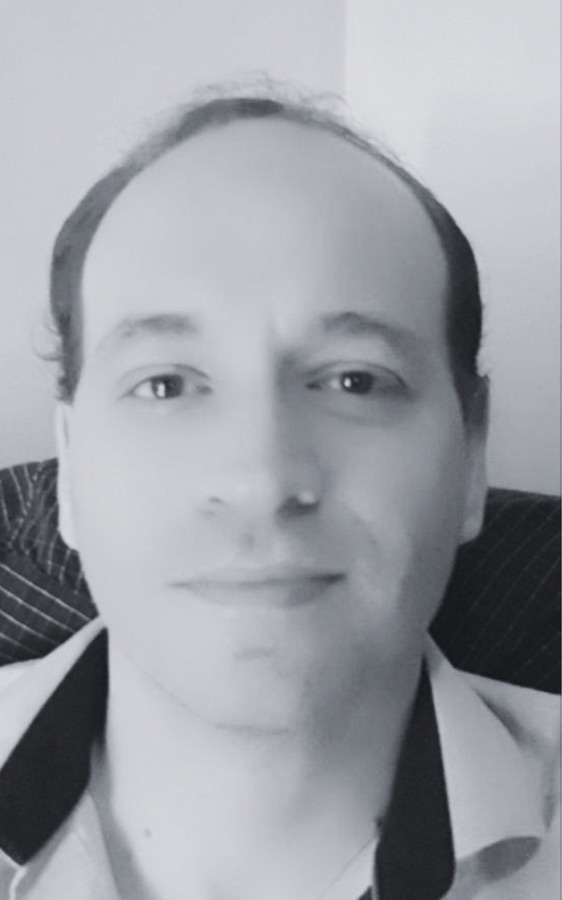
J.M. Struijk is an autistic author with ADHD, originally diagnosed with Asperger's, and a single father who raised a child with autism and ADHD. He writes practical companions for the brain you actually have, published independently through JMS Media Group LLC. See all the books or read more about the author.
I write from lived experience as an autistic adult with ADHD, not as a clinician. Nothing here diagnoses anything or replaces working with a doctor, therapist, or ADHD coach. If something in your life has become unmanageable, please talk to someone qualified.
The ADHD Survival Kit
Six printable tools I keep coming back to myself. Free PDF, sent to your inbox.